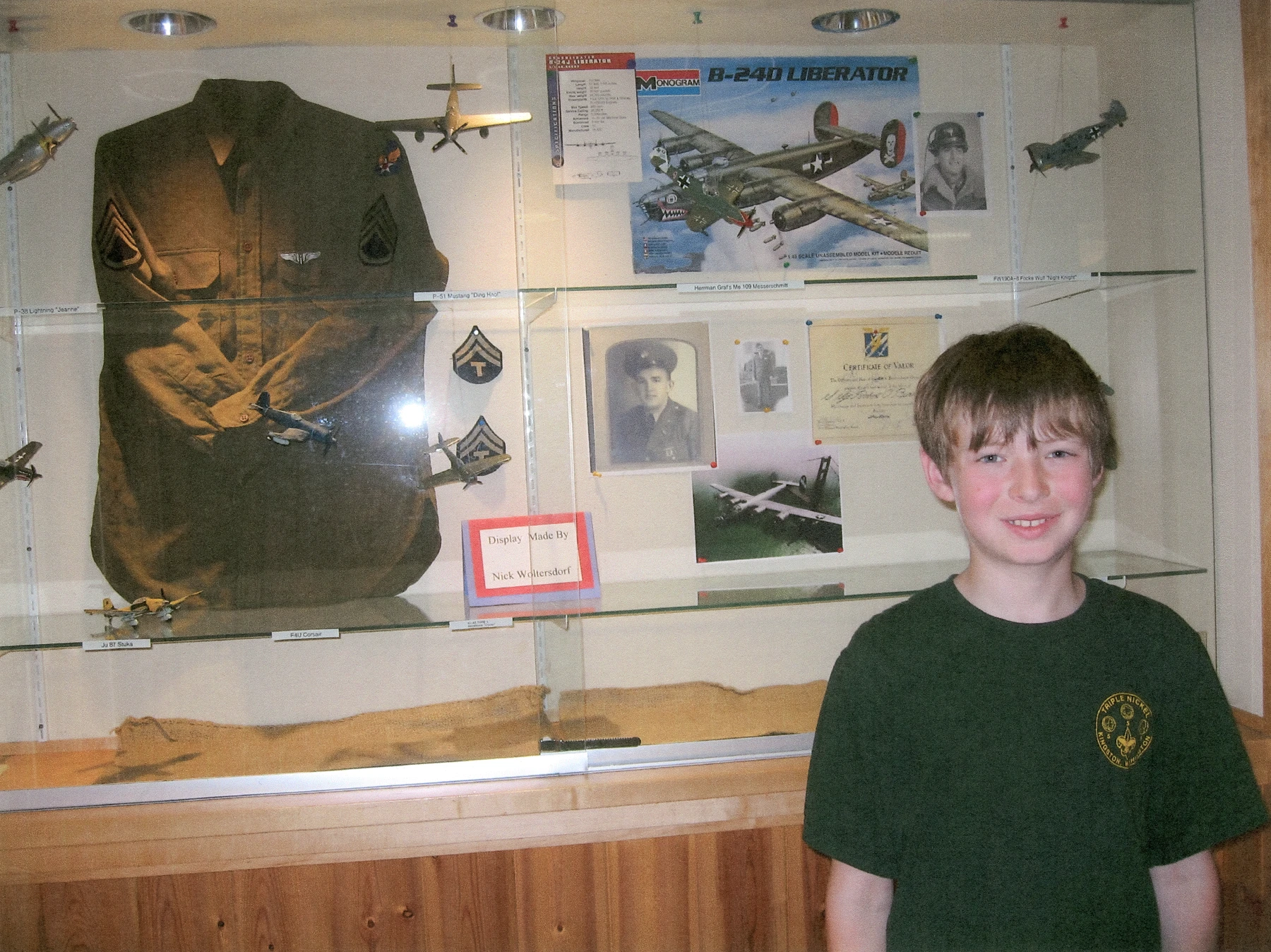
TamiyaColor
Nicholas Woltersdorf
From kindergarten through the fourth grade I was homeschooled. My family lived on a farm in a rural area of Washington State. The elementary school in my district was consistently ranked near the bottom in all areas; being overcrowded, undersized, and outdated. My parents were very worried that my siblings and I would end up being idiots and/or criminals if our educational foundation involved both the faculty at David H. Wolfle Elementary and the curriculum of the newly instituted No Child Left Behind Act. Unfortunately, despite their best efforts, I became an idiot and a criminal anyways.
One of the unsung benefits of homeschool as a preteen is being able to finish your classwork early in the day. My mom - our teacher - would give us our assignments and lessons in the morning around 8, and on most days we'd be done before lunch. No homework was assigned - that would have been a bit redundant. We'd do our farm chores at some point throughout the day, but still be free to use the afternoons how we wanted 5 days a week. My two younger sisters would usually spend this time playing Barbies or watching Disney Channel. I, on the other hand, had another calling: making art.
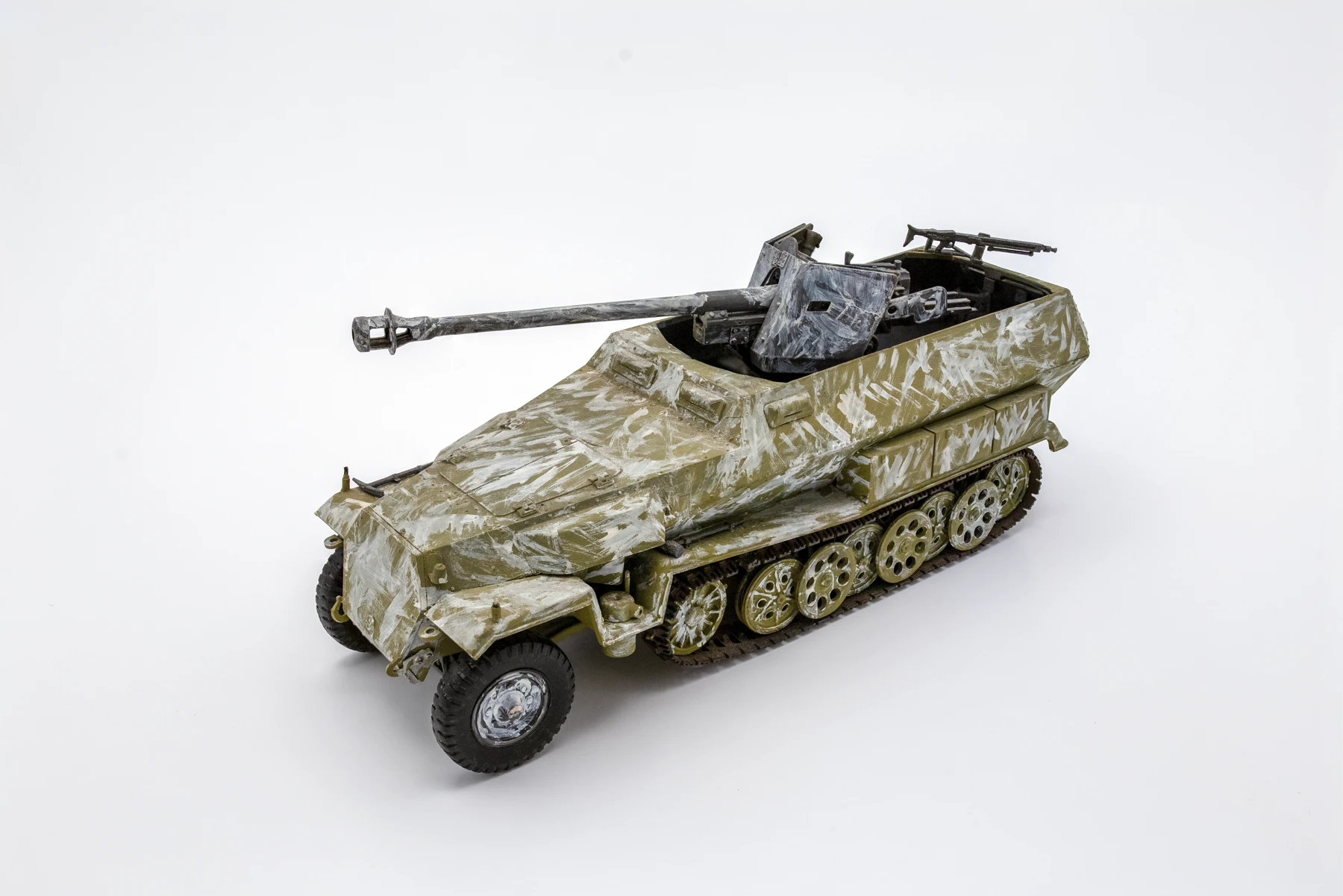
The Tamiya Corporation was founded in Shizuoka, Japan, a year after the conclusion of World War Two. They were initially a lumber supply company. Faced with an abundance of scrap wood produced during general operations, one Tamiya employee had the idea to begin marketing toys and scale model kits made from the leftover timber. Unexpectedly, these quickly became immensely popular, outpacing the sales of their lumber products and selling well worldwide - particularly in the USA. By the early 1950s, Tamiya had stopped using their scrap to make tiny cars, planes, tanks, & trains, and just started using the whole tree. After becoming an early adopter of the plastic injection molding process, demand for Tamiya's model kits soared even higher, as the plastic molds allowed for levels of detail and accuracy that were unprecedented in the toys of the era.
In 2004, while going door to door selling Boy Scout popcorn - which, for the uninitiated, is a more expensive, less iconic, and generally not-as-good version of Girl Scout cookies that also gets stuck in your teeth, I met a man named Richard Vinnage. He had been among that first wave of American youth in the 1950s to be captivated by the small yet vivid world made possible by Tamiya model kits. The hobby had become a lifelong passion for him.
Mr. Vinnage was also battling dementia.
After a long day of ignoring ‘No Soliciting’ signs and knocking on doors with my dad, Mr. Vinnage and his wife Julie answered theirs. I quickly abandoned my sales pitch to ask about a large, detailed diorama featuring an American M4 Sherman tank sitting behind him on a shelf in the foyer. Upon hearing the question, Mr. Vinnage - a man probably in his early 70s - lit up with an excitement that I can only describe as childlike.
He invited my dad and I inside to show us his model-making setup in the garage, pointing out the completed kits he was proudest of - several times - along the way.
"This - this here is the USS Independence," I remember him saying, showing me a large scale model of a sailing ship. "I made it! I tied all the rigging myself, with so-some tweezers. It's the USS Independence."
"You already mentioned that, Richard," Julie interjected upon him repeating himself. She was gentle with her husband, but you could tell contending with his memory was beginning to wear on her.
"Oh," he replied. "W-well, did I show you this one? I made it! It's a German Panther Tank. You know - my dad, he, he blew one of those up, during the war. He was a gunner, a gunner on the M4 Sherman. I have a model of one out here in the hall-"
As he turned to walk back into the foyer, beckoning us, Julie stopped him, tenderly turning him off course.
"They saw that one Richard! Nick liked it very much." she said, beaming a soft smile in my direction. "That's why we're in your model room now!"
"Oh, now is your name Nick!?" reestablished Mr. Vinnage, "And you like model kits, do you? Say, have I shown you this one? I made it! It's the USS Independence!"
My dad and I stayed at the Vinnage's house for about an hour. I got the sense that talking was therapeutic for Richard, and with time he was able to come around to new topics - all related to modeling, but new topics on the subject nonetheless. He showed us quite a few of his finished tanks, planes, cars and trains - all crafted with an extraordinary level of care and attention to detail - and all with the rightfully proud disclaimer of, "I made it!"
Eventually, it was time for the Vinnages to have dinner, and time for my dad and I to see if I could sell anyone else some of my shitty popcorn. As we turned to go, Richard exclaimed "Wait!", and reached up onto his shelf. Then, he knelt down and pressed a cardboard box into my hands.
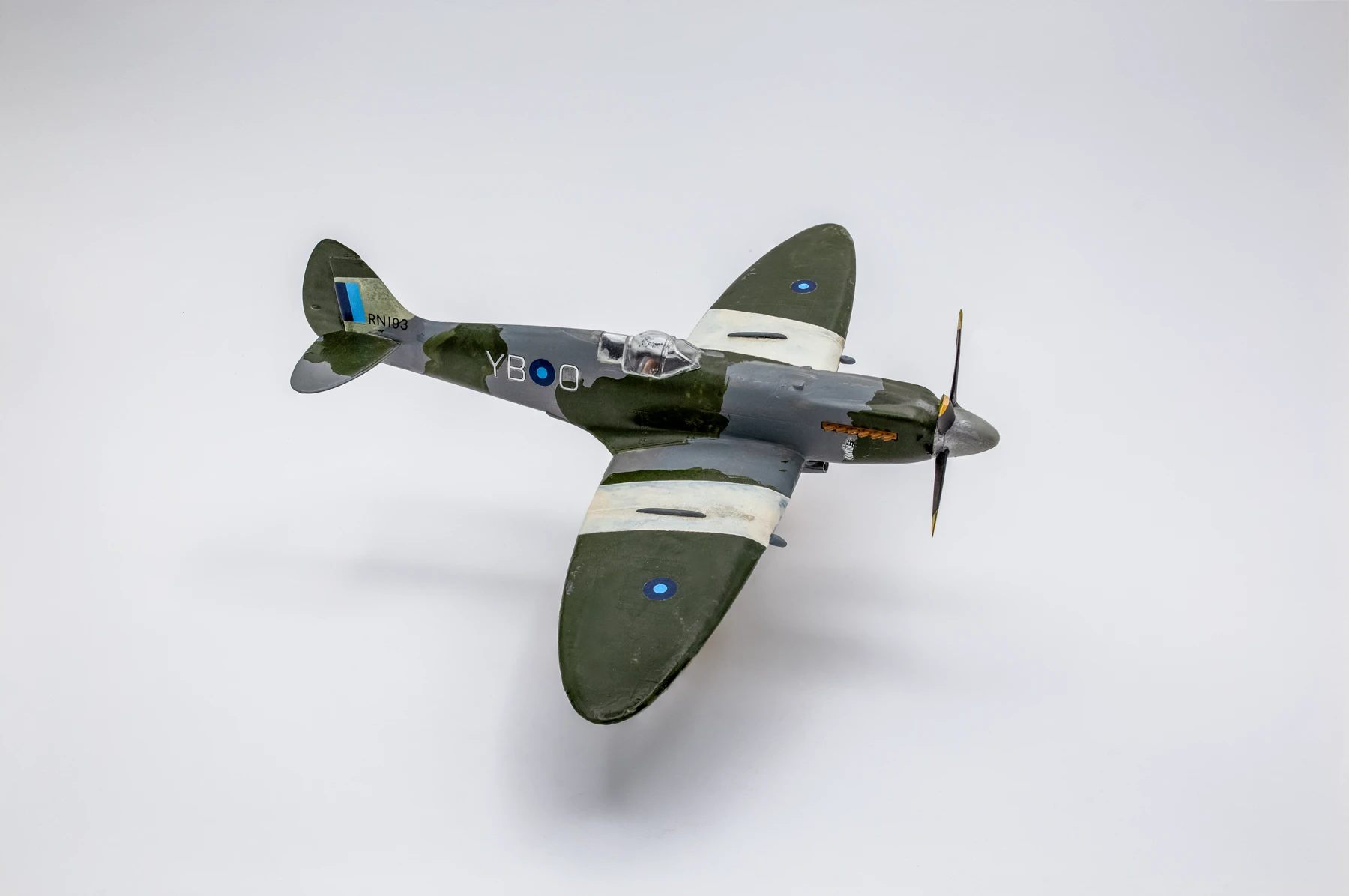
"This is a, a, a British Supermarine Spitfire. They have, Rolls Royce engines, y-you know! And, and the kit-- it's a Tamiya."
He said the last word with the same level of reverence that a priest would while whispering Jesus's name in the confessional.
"Tamiya; Tamiya - they're the best! The best models. I want you to have this."
He then grabbed a few other things from around the room - a few brushes, liquid cement, and several bottles of TamiyaColor acrylic paint, throwing them in a bag for me and passing it over as well.
"And, and TamiyaColor! It-it's my favorite paint. The acrylic! The water- the watercuh- the watercol, lor.... it-it-it-it- it's runny.... But not - not the acrylic. It doesn’t run."
As Richard struggled to blurt out the syllables of the word "watercolor", Julie put her hand on his shoulder to gently pull him away for dinner. Mr. Vinnage ignored the gesture for a few more fleeting moments.
"And, well, well, young man - one more thing, remember this," he said, speaking directly to me."Modeling - it's art, okay?"
As these four words left his lips, I could tell he was experiencing a brief instance of glorious, rushing clarity. In this moment, Richard knew exactly where he was, what he was saying, and who he was saying it to.
Julie squeezed his shoulder again, and he looked up at her. When he looked back, the moment was gone. He straightened up and we said our goodbyes. As we walked down the stairs, I heard Mr. Vinnage talking to his wife.
"Now, Julie, was that boy our son?" he asked.
"No Richard, that was Nick. He's a Cub Scout," replied Julie as she swung the door shut. "You showed him some of your models, remember?"
It was dark now, and my dad pulled out a flashlight. As we walked down the street towards the next house, my dad spoke - mostly to himself I think - "You know, it really is remarkable. Richard's dementia is clearly pretty bad - yet he can remember the name and designation of every tank, car, plane and train he's got in that place." He turned to me. "Nick - that's what we call commitment, right there."
I built the Spitfire Mr. Vinnage had given me within a few weeks of meeting him. I was instantly hooked. I loved every part of the process - removing and prepping the different parts, painting and then gluing them all together, and choosing the decals. It really did feel like making art. My dad helped me a lot one weekend on that first kit, but after it was finished, I knew I wanted to build more. I shoveled out the shit from my neighbor's cow pasture for a bit of money, and afterwards, my dad helped me order some more Tamiya kits and paint on eBay. "Acrylic - not watercolor, dad," I remember telling him.
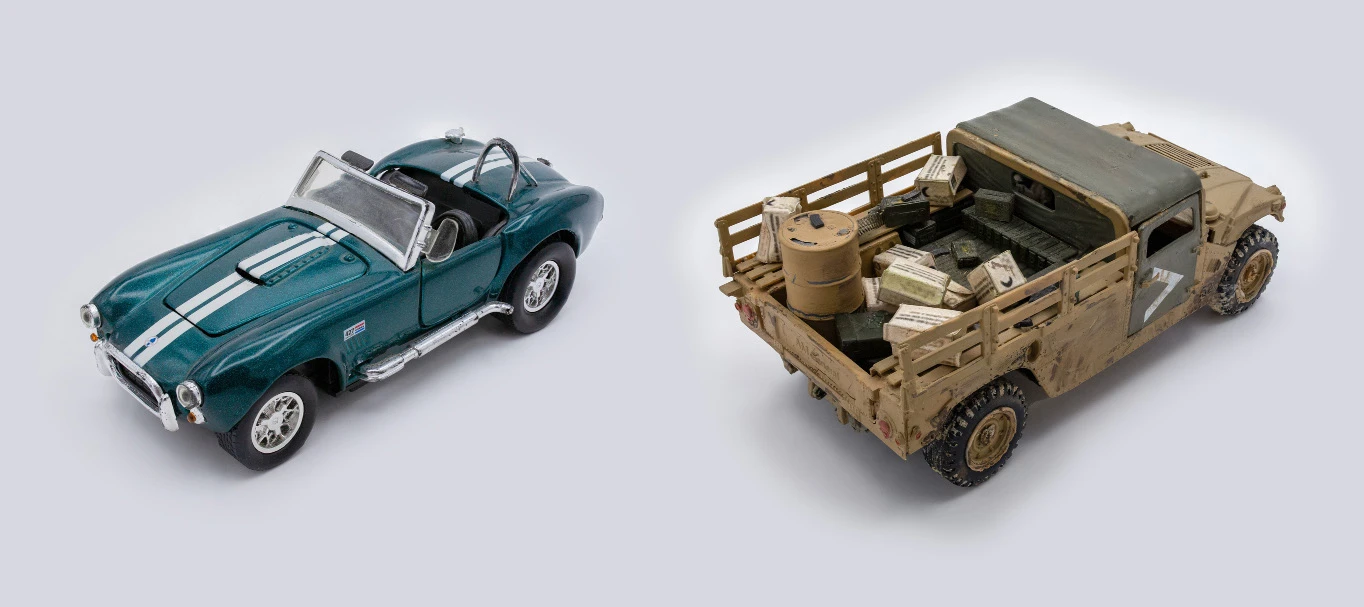
When they arrived, he helped me set up a space in the attic, where I could build models and my parents wouldn't have to worry about an 8-year-old getting paint on the carpet. It was perfect. My dad had a CD player already set up there - he would hide out from my mom and smoke cigars after work some nights. From then on, whenever I finished school and chores, I'd spend the rest of my day up in "my workshop", listening to classic rock radio and painting little pieces of Japanese plastic to look like the greatest machines of our time. Making art.
This ritual quickly became the thing I was most excited about every day - the reason I would rush through my school and housework. I vividly remember getting a profound and tangible sense of euphoria soon after I started working on whatever model kit I had on the table - a euphoria that I didn't get from anything else at the time.
A year or so passed. One afternoon, after I’d finished my schoolwork, my mom called me down from the attic.
"Nick," said my mom, "Mrs. Vinnage is on the phone now. She wants to talk to you."
My mom handed the phone down to me. She looked sad. My mom was normally a happy person so I was nervous.
"Hello?" I said into the phone.
"Hi Nick - remember me?" replied the woman's voice through the line.
I'd met Julie twice now. After I finished my Spitfire, my dad and I went back to show it to Richard. He was excited that someone else had made a model in his house. "YOU made that?!" I remember him exclaiming. "Well, well that's just great. Say, a Spitfire! Did you know - Rolls Royce, th-they made the engine on those! But you? You- you made that one! Hey, guess what? This, this is an M4 Sherman. I made that! My dad, my- he was a, a gunner on one during the war." It was mostly a repeat of the first conversation. Julie had looked more tired that time.
"Nick - I have some bad news," said Julie over the phone, "Richard - he passed on last week. You remember he had dementia? Oh - of course you do. Well, he stopped talking a few months back. He just forgot how. More recently, we - we had to take him to the hospital and, well - he had what's called a stroke last Friday."
Julie was speaking in a way I hadn't heard before - there was a profound sadness in her voice, but also a more musical glimmer of life. A weight had been lifted off her shoulders, but maybe not one she wanted to drop.
"He's in a better place now.... he doesn't have to remember things anymore," she finished.
"In heaven," I remember saying.
"Yes, in heaven," affirmed Julie.
"Well, don't worry, Julie, I think God has Tamiya kits up there," I replied.
Julie laughed. "That's why I'm calling, Nick, beyond just to tell you about your friend. After you came over those times, Richard always asked where the boy was with the--" She paused, trying to remember.
"The Supermarine Spitfire!" I interjected excitedly. Julie laughed again.
"Yes - that's exactly what he said. Well, for a few hours after you'd leave, he'd always ask where you were, and if you needed any more TamiyaColor." She paused again. "Our grandchildren love looking at Richard’s models, but they don't have much interest in building them. I'm calling to see if you'd like the rest of his kits and paint.”
I gave the most emphatic yes I had ever uttered. We made plans to take my dad's truck to pick up the kits that Saturday. When I arrived at the Vinnage's house, the duality of Julie's voice was reflected in her physical demeanor too - sad, but calm - at peace.
We put all the kits, brushes, and paint into the pickup bed. There were hundreds of each - a lifetime's worth of plastic models and supplies, and then some. As I was walking out her door with the last armful, I took one final look at the tank model sitting across from the doorway. Julie caught my gaze.
"You know, Nick," she said to me. "That's an M4 Sherman. Richard's father served on one of those during the war." She paused and gave me a soft, wry smile.
When I got home, my dad helped me carry everything up to the attic. The stack of model kits was taller than me both vertically and horizontally.
"What do you think you'll build first?" he asked.
I thought for a moment, before I saw the one and only choice. I pulled out an M4 Sherman kit from the middle of the stack.
"Tamiya!" he said. "Nice!"
After my dad left, I turned to my workbench. There were hundreds of glass 25 ml acrylic paint bottles sitting on it now - in enough different shades to make a Pantone employee's head explode. I decided to open them all up to take stock of everything that was suddenly available to me - the caps weren’t always good indicators of the actual paint color, after all.
I set about opening all the bottles. The now familiar sense of euphoria quickly set over me, stronger than ever this time. “I’m going to make some art,” I thought to myself.
A few hours later, my dad came up to check on me. He didn’t get home til late most weekdays, after I’d already gone to bed, and on the weekends we were usually both busy with something or another - so he didn’t get to watch me make models often. I was excited to show him how far I’d gotten on the Sherman already.
When he poked his head over the stairwell, though, his face suddenly contorted into a very specific sort of grimace - like when you smell a skunk, or pass by some particularly bad roadkill. I was confused.
He walked over and turned down the radio, which I had on max volume - I thought maybe that could have been it. Then he turned to me. Before he had the chance to say anything, though, he caught a glimpse of what was behind me. His head moved back and forth across the table, eyes widening.
“Look dad! I’m working on the tracks!” I said, thinking he was surveying my tank model.
“Jesus, Nick! Why are all of these open?!” he exclaimed, walking over and picking up one of the TamiyaColor bottles, “And why are the windows closed? Nick, it smells like a chemical factory up here!”
I didn’t understand the urgency of his tone. “Dad, I wanted to see all the new colors Richard gave me! And I always leave the bottles open while I’m working, so I can dip my brush in.”
My dad shook his head. He worked for an OSHA contractor - safety violations were a cardinal sin to him.
“Nick…” he said, putting one hand on my shoulder, and with the other, reaching over to the workbench to start capping the bottles, “This is all acrylic paint. Acrylic paint has paint thinner in it- and paint thinner makes a smell that’s… bad for you.”
I looked up at my dad, in mild disbelief. “Well, dad, remember Mr. Vinnage said that Acrylic is better. He said Watercolor runs. Do you remember him saying that?”
My dad sighed and walked over to the one window in the space. He opened it. It wasn’t a very big one.
“Nick, when you’re building your models…. Do you ever feel kind of, well, happy, I guess? Like, really happy?”
I didn’t understand why he’d ask me this. “Well, yes, Dad. I’m making art. I feel great when I’m making my models. It always makes me feel really good”.
“And I’m glad you’re having fun with it. But, Nick - is it a happiness that you, I guess, don’t feel from anything else?”
I thought about it for a second. “I guess so. I just really like making models, I think.”
My dad stared off into space. He had one more question for me.
“At about what point do you start to… to get happy, when you’re working on the models, Nick? When you’re cutting the parts out, or doing the decals, or….”
“Probably when I’m painting them,” I said. “I like the painting. Oh, and gluing them together. That feels good too. It’s fun to see it almost done.”
Upon the statement about the glue, my dad - a career risk management expert - hung his head a bit.
“Nick….” he said. “I’m sorry to interrupt your model-making but I need some help outside in the field. Can you go get your boots on for me?”
The next day when I went up to work on my models, I was shocked to find all of my paint was gone. I ran downstairs.
“Dad, someone stole my paint!” I said.
My dad looked at me over his glasses. “I had to take that, Nick,” he said to me gingerly.
He then explained to me in more detail about fumes, and that having acrylic paint in an enclosed space without proper ventilation was bad for me. “It may actually cause dementia later in your life, like Richard had,” he added.
I didn’t really understand and thought he was just being mean. He told me that he’d replace the Acrylic TamiyaColor with Tamiya Watercolor equivalents, showing me that they had the same colors.
“But Dad - those are runny! They don’t stick to plastic the right way. Remember, Richard said!” I repeated. There was no arguing with him, though.
After some further protest, I begrudgingly went on Tamiya’s website and picked out 10 or so Watercolor shades that would be the most useful to me. From there on out, my dad made a diligent effort to get a couple more watercolor bottles each month to help build up my color palette again. I could tell he felt bad for having to take away Richard’s massive selection of paint.
“I like supporting your art,” he’d tell me.
I kept making models for a few more years. In 5th grade, I stopped being homeschooled and had less time on my hands. I kept the many kits that I’d finished displayed proudly on my shelves and suspended from the ceiling, but the bottles of paint and glue in the attic slowly dried up as I got older. As I went further into Middle School, I started doing sports and making movies with my friends. The latter became the art that my parents got dragged into supporting. I suddenly just didn’t have much opportunity to work on the plastic kits anymore. And, besides, something about the Watercolor paint just didn’t do it for me like Acrylic TamiyaColor had. I remember thinking that Richard was right. Definitely too runny. Yeah, that was it.